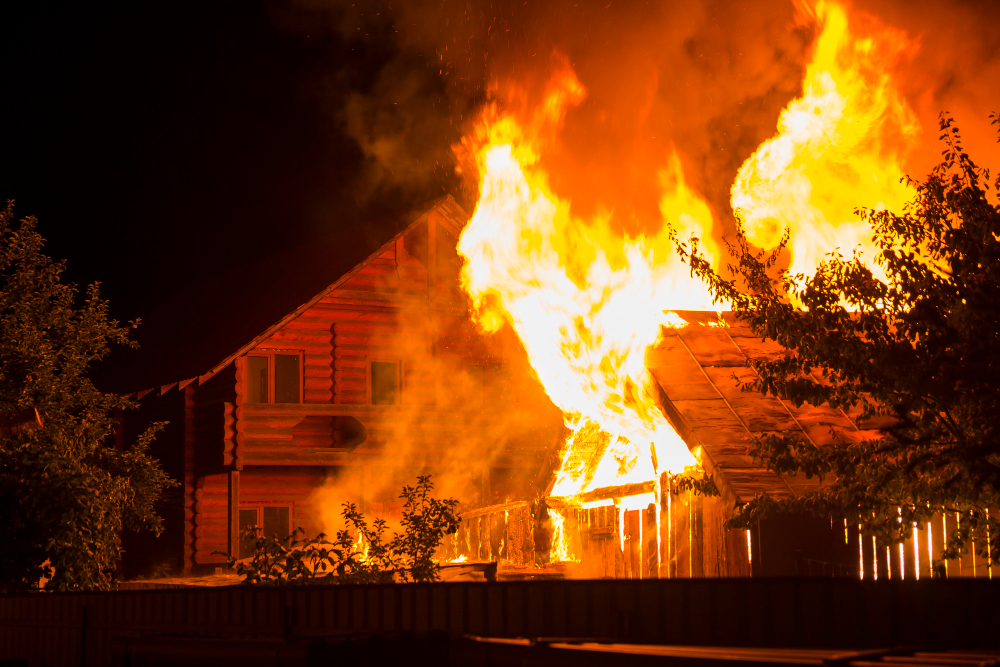
A house fire is one of the most overwhelming things a homeowner can experience.
Most people picture fire damage as the area where the flames actually burned. A basement utility room. A kitchen. A garage. A bedroom. One clear “fire area” that needs to be cleaned up and rebuilt.
But in real fire reconstruction work, the damage often goes much farther than the room where the fire started.
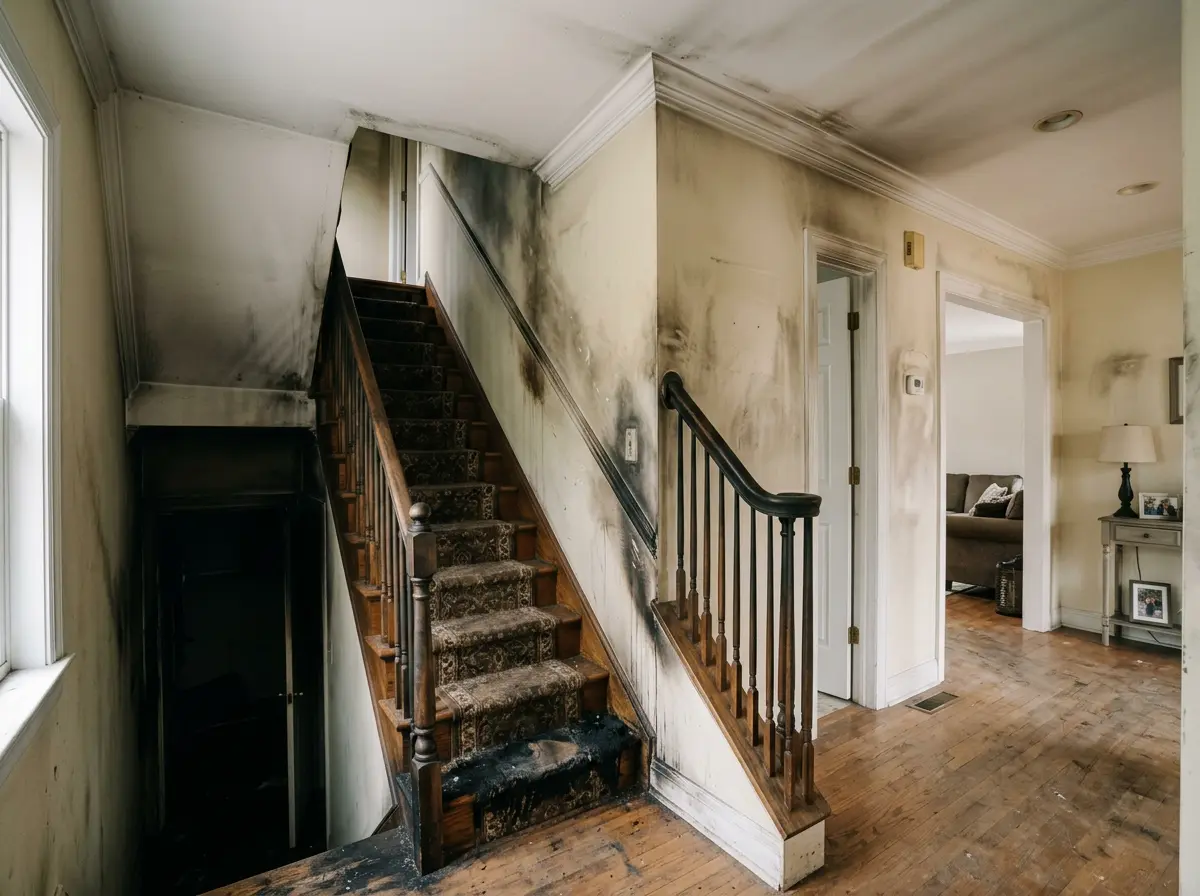
Smoke travels. Soot settles. Odor penetrates. Water from firefighting efforts spreads. Heat affects nearby materials. And in many cases, the home may need repairs far beyond the visibly burned area.
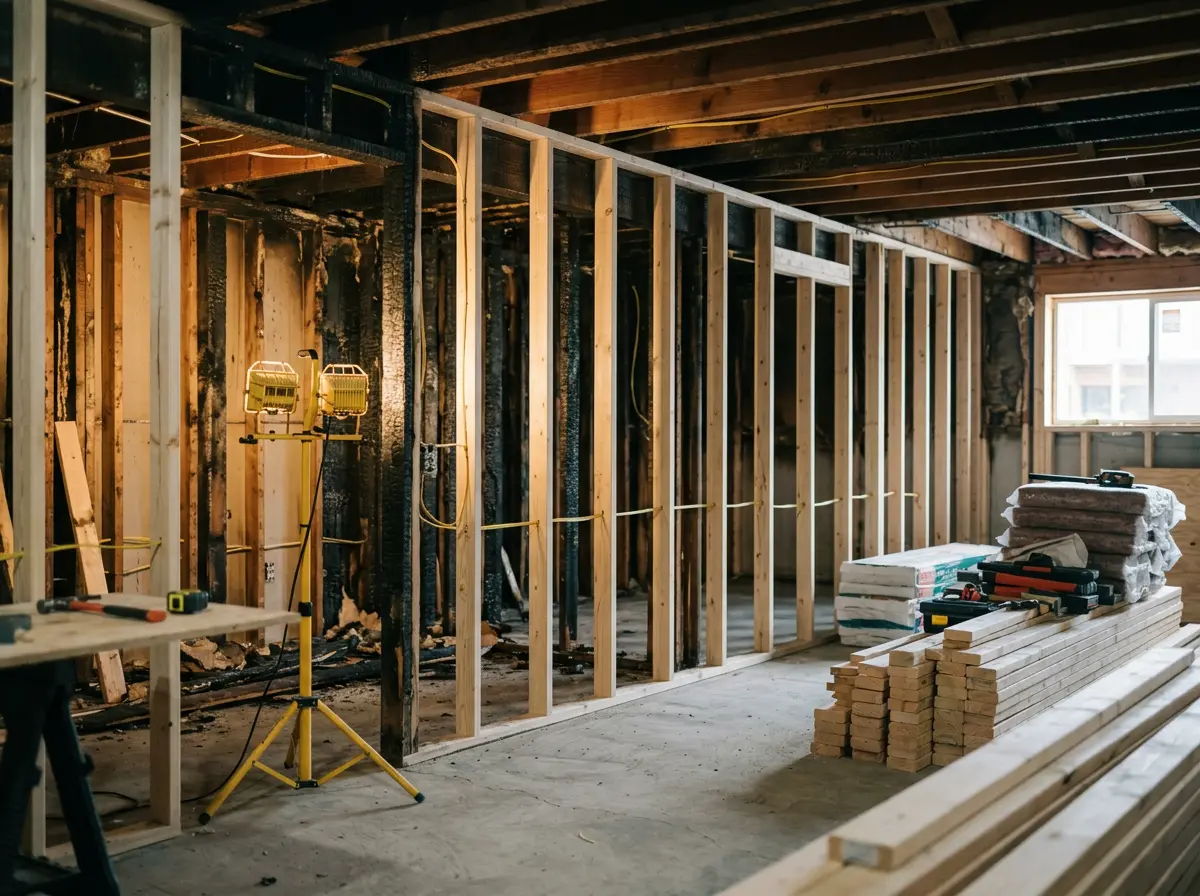
We recently completed a fire reconstruction project where the fire started in a back basement utility room. At first glance, someone may have assumed the damage was mostly downstairs.
That was not the reality.
The basement required major reconstruction and reframing, but smoke damage affected the rest of the home. The project expanded into full-house repairs, including new drywall, new appliances, new cabinets, new bathrooms, repainting, and replacement of smoke-affected personal contents such as clothing.
That is the part homeowners often do not realize after a fire: the flames may start in one place, but the damage rarely stays there.
Fire Damage Is Not Just Burn Damage
The most obvious damage after a fire is the area that burned. That area may need:
- Framing repairs
- Electrical evaluation
- Plumbing evaluation
- Drywall replacement
- Insulation replacement
- Flooring replacement
- Structural repairs
- Full reconstruction
But fire reconstruction is not only about replacing what was visibly burned. A home also needs to be evaluated for smoke, soot, odor, water damage, and heat damage. The American Red Cross advises homeowners not to re-enter a fire-damaged home until authorities say it is safe, and to throw away food, beverages, and medicine exposed to heat, smoke, or soot.
That matters because the visible damage is only one part of the loss. A wall, ceiling, cabinet, appliance, or piece of furniture may look “okay” from across the room, but that does not mean it is clean, safe, odor-free, or restorable.
Why Smoke Damage Can Be Worse Than People Expect
Smoke is one of the biggest reasons a fire in one part of the home can affect the whole house. Smoke moves through open rooms, hallways, stairwells, HVAC systems, wall cavities, attics, gaps around doors and trim, and electrical and plumbing penetrations.
Even if flames are contained to one area, smoke can travel through the structure and settle throughout the home. The Colorado Department of Public Health and Environment notes that smoke, ash, and soot after a fire can deposit particulate matter, volatile organic compounds, and other chemicals on furniture, walls, floors, and other surfaces.
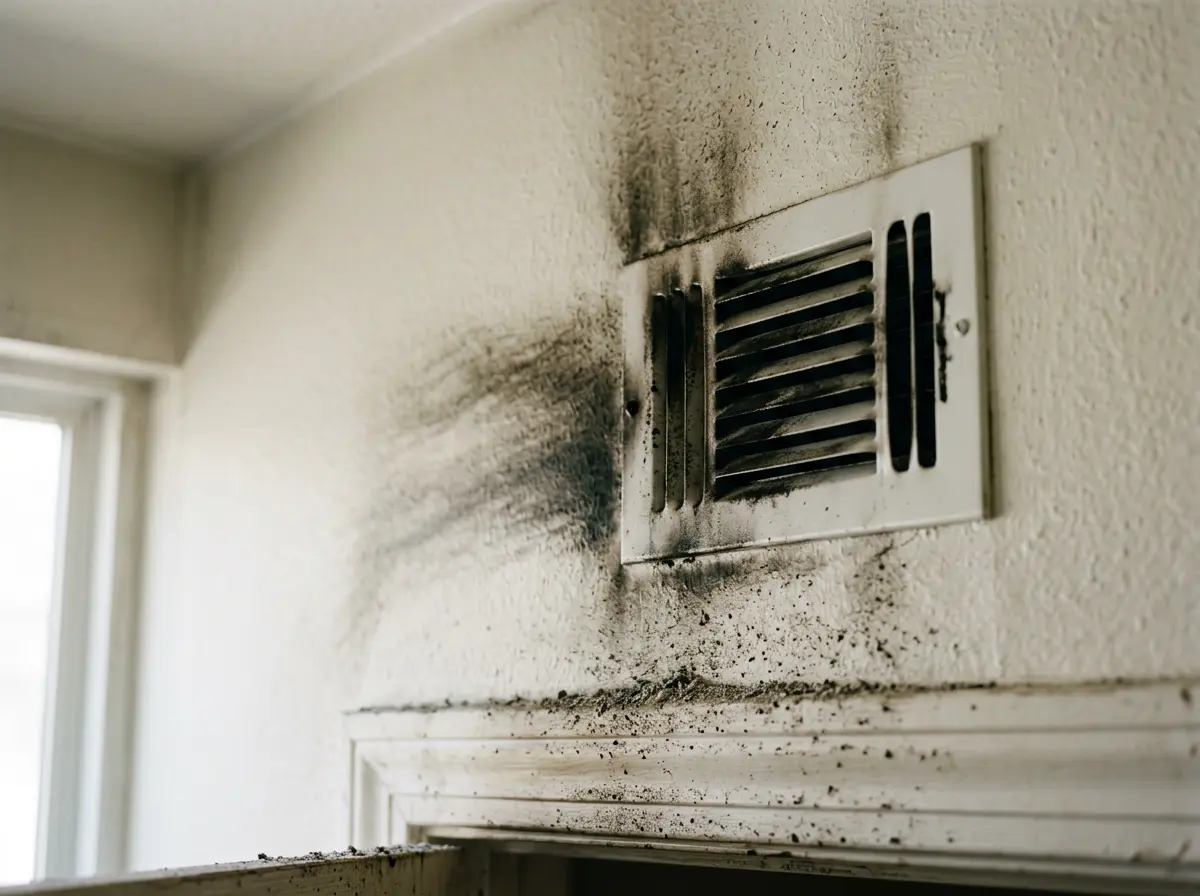
That is why smoke damage is not just a smell issue. It can affect drywall, paint, flooring, cabinets, ductwork, furniture, clothing, insulation, appliances, trim, and personal belongings.
In some cases, smoke and soot can be cleaned. In other cases, materials may need to be sealed, removed, or replaced depending on the severity of contamination, odor, material type, and the restoration plan.
“But the Fire Was Only in One Room…”
This is one of the most common questions homeowners have: if the fire was only in one room, why does so much of the house need work?
It is a fair question. The answer is that fire damage is not limited by the room where the flames were visible.
In the recent fire project we completed, the fire started in the back basement utility room. But the impact reached far beyond that room. The downstairs area required significant rebuilding, while the smoke damage affected the rest of the house enough that multiple rooms needed major repair. That included reframing downstairs, new drywall, repainting rooms, new bathrooms, kitchen work, new cabinets, new appliances, and smoke-affected contents and clothing.
This is not unusual in fire reconstruction. The actual scope depends on what the fire, smoke, soot, water, and heat affected — not just where the flames were located.
Smoke Damage Can Happen Even Without Direct Burn Damage
A home can have major fire-related damage even if there is no direct burn damage inside that unit or room.
We had another fire project a few years ago where the fire started in the condo below the client’s unit. Her unit did not have the same type of obvious flame damage. But smoke moved into the structure and caused serious damage. The unit ultimately needed major reconstruction, including new studs, drywall, and finish work.
In multi-family buildings like condos, townhomes, and apartments, a fire below, beside, or near your unit can still affect your home. Smoke can move upward. Soot can settle into cavities and surfaces. Odor can remain in materials long after the fire is out. So even when a homeowner says, “My unit didn’t burn,” that does not automatically mean the home is unaffected.
Why Soot Is Such a Big Deal
Soot is the fine residue left behind after incomplete combustion. It can settle on surfaces throughout the home and may show up as black or gray film, oily residue, staining around vents, discoloration on walls or ceilings, residue on contents, and odor that does not go away.
Soot can be difficult because it does not always stay in the obvious areas. It may travel with smoke and air movement, then settle in rooms far away from the fire. The EPA warns that ash deposited indoors or outdoors after a fire can become airborne during cleanup and should be handled carefully, especially around children, older adults, and people with heart or lung conditions.
That is why homeowners should be careful about jumping into cleanup too quickly. Wiping, vacuuming, or disturbing soot without the right approach can sometimes make the situation worse or spread particles further.
Water Damage After a Fire
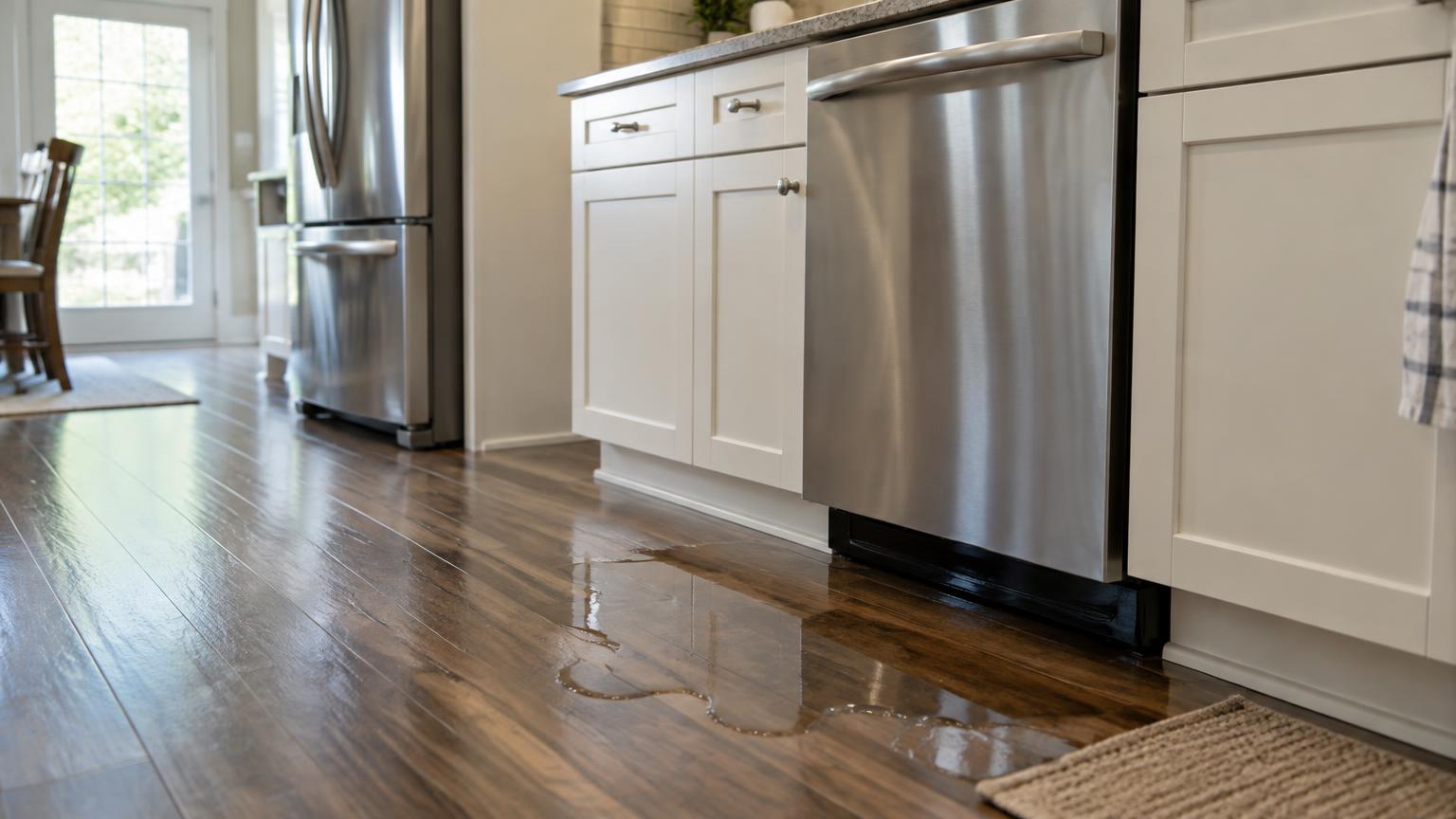
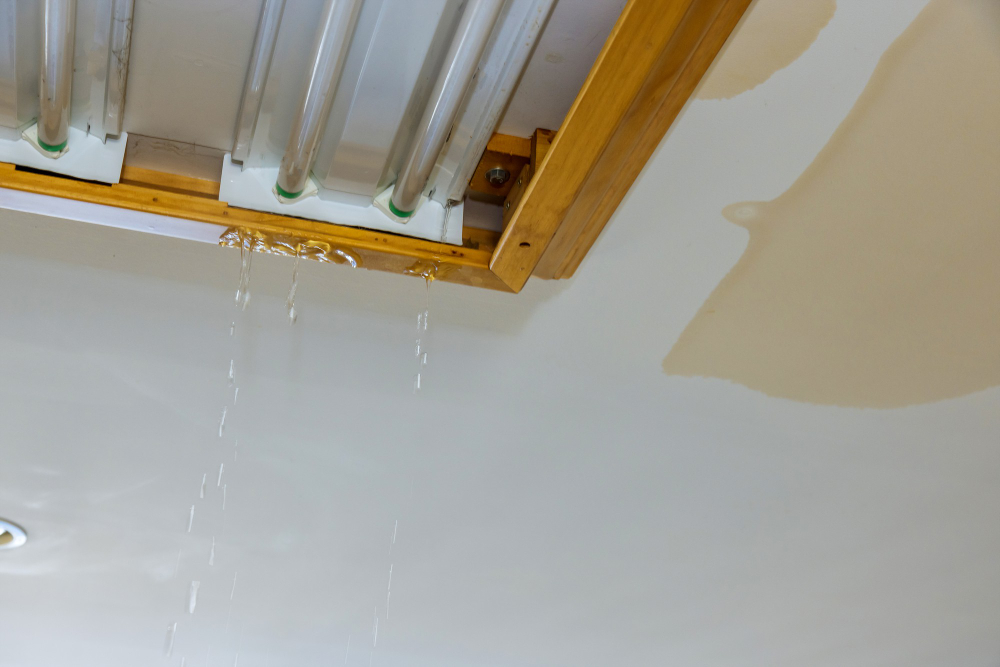
A fire loss may also become a water damage loss. When firefighters put out a fire, water may enter flooring, subflooring, drywall, ceilings, insulation, wall cavities, cabinets, basement areas, and framing. That water is necessary to stop the fire, but it can create a second layer of damage.
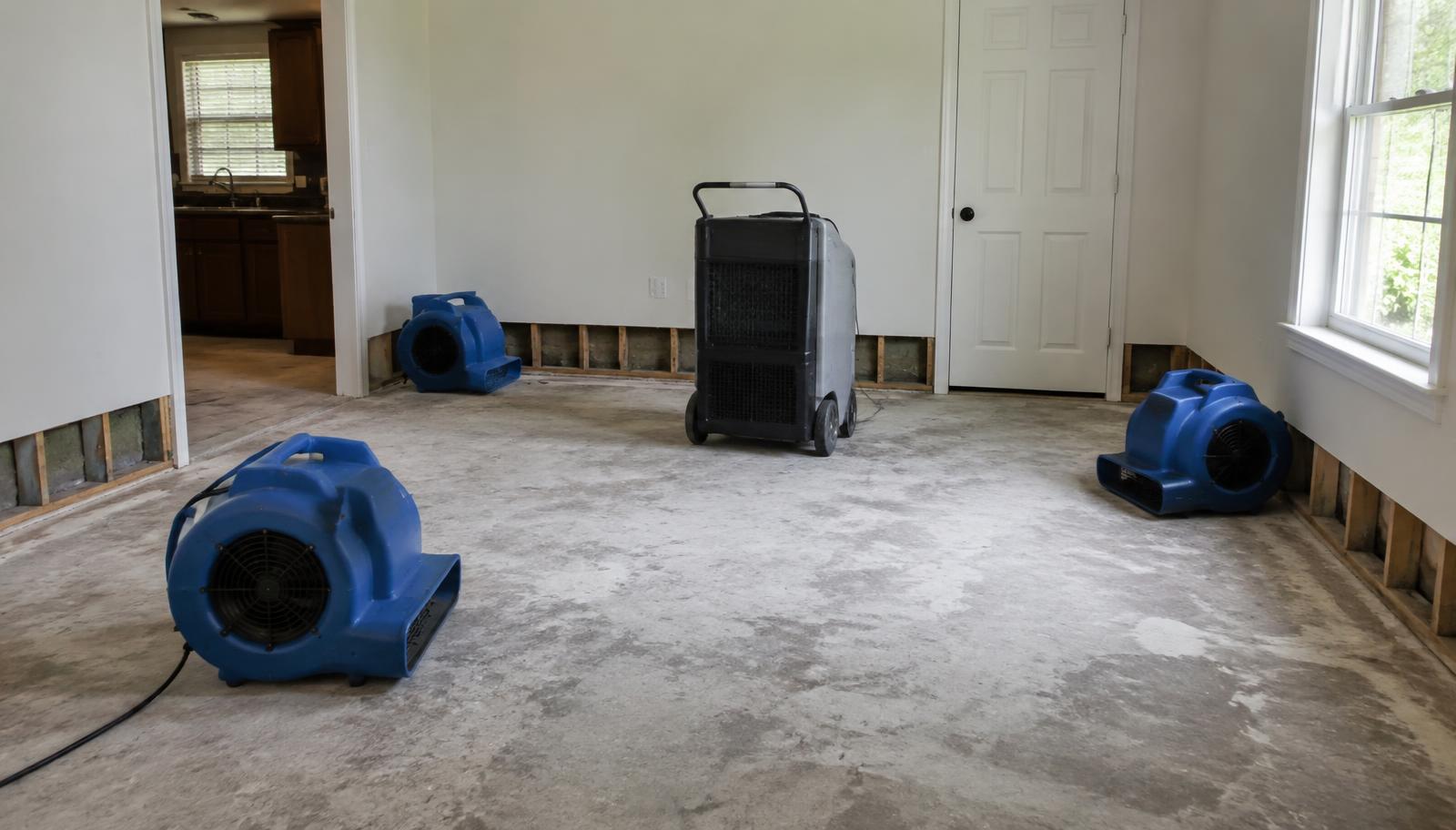
After the fire is out, the home may need water extraction, drying, moisture mapping, removal of wet materials, odor control, mold prevention, and structural evaluation. The goal is not just to clean what looks dirty. The goal is to stabilize the home, prevent additional damage, and understand the full scope before reconstruction begins.
Why Appliances, Cabinets, and Contents May Need Replacement
After a fire, homeowners are often surprised when items far from the fire area are listed for cleaning, sealing, or replacement. That can include appliances, cabinets, countertops, clothing, furniture, window coverings, flooring, trim, doors, paint, and drywall.
In the recent project we completed, smoke affected the home broadly enough that appliances, cabinets, clothing, bathrooms, kitchen components, drywall, and paint all became part of the restoration conversation. Smoke and soot do not only affect what they visibly touch. They can leave odor and residue behind. Porous materials may absorb odors. Mechanical systems may move smoke through the home. Cabinets and appliances may hold residue in seams, surfaces, filters, gaskets, and hidden areas.
Not every item automatically needs replacement. Some items may be cleanable. Some may be restorable. Some may need replacement. The key is having the full scope reviewed carefully.
The Reconstruction Process After a House Fire
Every fire loss is different, but a typical fire reconstruction process often includes several phases.
1. Safety and Emergency Response
The first priority is always safety. Make sure everyone is out of the home and emergency responders have cleared the property. The Red Cross guidance for an active fire is simple: get out, stay out, and call emergency services. No one should enter a fire-damaged home until it has been deemed safe by the proper authorities.
2. Insurance Claim and Documentation
Once everyone is safe, the homeowner typically contacts their insurance company and begins the claim process. Before major cleanup begins, it is helpful to document burn damage, smoke and soot damage, water damage, damaged contents, affected rooms, temporary repairs, and emergency services performed.
The Red Cross notes that an insurance agent may help with immediate living expenses and repair assistance after a fire. Homeowners should be careful not to throw away items too quickly unless they are unsafe or directed to do so — the insurance company may need documentation.
3. Professional Assessment
A professional assessment helps determine how far the damage actually went. This may include looking at structural framing, drywall and insulation, HVAC system impacts, electrical systems, plumbing systems, cabinets and finishes, flooring, smoke odor, soot contamination, and moisture from firefighting efforts. This is the stage where many homeowners discover that the fire damage extends beyond the burned area.
4. Mitigation and Cleanup
Mitigation may include securing the property, removing unsafe materials, cleaning soot and smoke residue, deodorization, water extraction and drying, contents pack-out, temporary power or heat solutions, and moisture control. Mitigation focuses on stabilizing the property and reducing further damage. Reconstruction focuses on rebuilding what was damaged.
5. Scope Development and Estimating
After mitigation and assessment, the reconstruction scope can be developed. A fire reconstruction estimate may include demolition, framing, insulation, drywall, texture, paint, flooring, cabinets, countertops, electrical, plumbing, HVAC-related work, finish carpentry, cleaning, project management, and permits or inspections where required. The more detailed the scope, the easier it is to understand what is being repaired and why.
6. Reconstruction
Once the scope is approved, reconstruction begins. Depending on the damage, this may involve rebuilding one room, multiple rooms, or nearly the entire home. In our recent project, the fire started in the basement, but the reconstruction became a whole-home effort. Downstairs needed reframing and rebuild work. The rest of the home needed smoke-related repairs, finishes, repainting, bathrooms, kitchen work, cabinets, and appliances. That level of work requires coordination across multiple trades.
7. Final Finishes and Homeowner Walkthrough
The final stage includes finish work, punch list items, cleaning, and homeowner walkthrough. This is when the home starts to feel like a home again. For many families, this is the most meaningful stage because they have lived through the fire, the claim, the disruption, and the rebuild. A proper reconstruction process is not just about replacing materials. It is about helping the homeowner get back to normal.
Why a General Contractor Matters After a Fire
Fire reconstruction often involves more than one trade. A project may need framing, drywall, painting, flooring, electrical, plumbing, HVAC coordination, cabinets, countertops, trim, doors, insulation, cleaning, documentation, scheduling, and insurance communication.
A fire reconstruction project needs someone who can look beyond the obvious damage and coordinate the full rebuild. The homeowner should not have to figure out every trade, every sequence, every hidden issue, and every scope gap alone. A good contractor helps review the damage, build a realistic scope, coordinate trades, communicate clearly, document work, help explain construction-related needs, and rebuild the home properly.
Common Homeowner Mistakes After a Fire
Mistake 1: Assuming the Burned Area Is the Only Damage
Smoke, soot, odor, and water can affect areas far from the flames.
Mistake 2: Cleaning Too Quickly Without Documentation
Insurance may need photos, notes, and item documentation before damaged materials are removed.
Mistake 3: Bringing Smoke-Damaged Contents Into Temporary Housing
Some items may carry odor or residue. It is worth asking the restoration team or adjuster before moving contents into another space.
Mistake 4: Underestimating Odor
Smoke odor can be persistent. If the source is not properly addressed, it may continue long after the visible cleaning is done.
Mistake 5: Not Getting a Full Scope Before Rebuilding
Starting reconstruction before the full damage is understood can lead to missed items, delays, and frustration.
Fire Damage in Condos, Townhomes, and Apartments
Fire damage can be especially complicated in shared buildings. If a fire starts in the unit below, beside, or above yours, your unit may still be affected. Smoke can move through shared wall cavities, attic spaces, floor systems, utility penetrations, mechanical chases, hallways, ductwork, and electrical openings.
That means one unit can suffer smoke damage even without direct flame damage. In the condo project we handled a few years ago, the fire was in the unit below. The client’s unit did not have the same type of visible burn damage, but smoke damage was significant enough that major reconstruction was needed.
This is why condo and townhome fire losses need a careful assessment. The question is not only “Where did the fire start?” The better question is “Where did the smoke, soot, odor, heat, and water go?”
How Long Does Fire Reconstruction Take?
Fire reconstruction timelines vary widely. A smaller contained project may take weeks. A major whole-home fire reconstruction can take months.
Timeline depends on severity of fire damage, smoke and soot spread, water damage, insurance approval, engineering or structural needs, permits and inspections, material availability, cabinets and specialty orders, trade scheduling, and homeowner selections. One of the biggest delays is not always the physical work — it is often the time needed to determine the full scope, document the claim, finalize approvals, and coordinate the rebuild. This is why clear communication is so important.
What Should Homeowners Do After a Fire?
- Make sure everyone is safe
- Do not re-enter until cleared
- Contact your insurance company
- Document the damage
- Avoid disturbing soot or damaged contents unnecessarily
- Get a professional assessment
- Address mitigation and cleanup
- Develop a complete reconstruction scope
- Rebuild the home properly
This list is not a replacement for emergency services, insurance guidance, or professional restoration advice. But it gives homeowners a clearer understanding of what usually comes next.
Final Thoughts: The Fire May Start in One Room, But the Damage Usually Doesn’t
Fire reconstruction is rarely as simple as replacing the burned materials. A basement fire can turn into a whole-home restoration. A fire in the condo below can damage a unit that never had visible flames. Smoke, soot, odor, water, and heat can all affect areas far beyond the room where the fire started.
Before rebuilding begins, it is important to understand what was affected, what can be cleaned, what needs to be removed, and what needs to be rebuilt. At Integrity Construction & Restoration, we understand that fire reconstruction is not just a construction project. It is a homeowner trying to get their home and life back after a difficult loss. Our goal is to help walk through the process with clear communication, honest guidance, and quality reconstruction work.
Planning Fire Reconstruction or Repairs?
If your home has experienced fire, smoke, soot, or water damage from firefighting efforts, it may be worth having the full scope reviewed before reconstruction begins. Integrity Construction & Restoration helps homeowners in Northern Colorado navigate reconstruction after fire and insurance-related damage. We’re happy to help you understand what may be involved and what the next steps could look like.
Fire Damage Restoration
Planning a project in Greeley, Fort Collins, Loveland, or Windsor? See how we handle it from start to finish.
See Fire Damage Restoration